Πέμπτη, Φεβρουαρίου 23, 2006

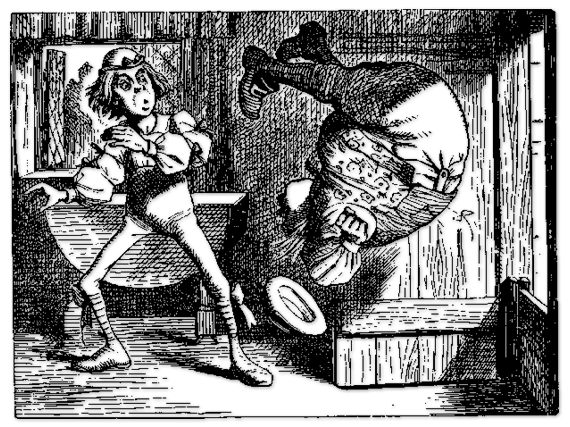
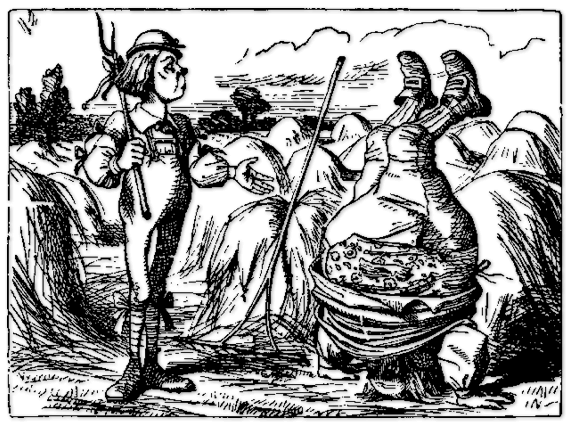
You are old Father William

Για τα γενέθλια του Sraosha και του Rakasha


`You are old, Father William,' the young man said,
`And your hair has become very white;
And yet you incessantly stand on your head--
Do you think, at your age, it is right?'

`In my youth,' Father William replied to his son,
`I feared it might injure the brain;
But, now that I'm perfectly sure I have none,
Why, I do it again and again.'


`You are old,' said the youth, `as I mentioned before,
And have grown most uncommonly fat;
Yet you turned a back-somersault in at the door--
Pray, what is the reason of that?'

`In my youth,' said the sage, as he shook his grey locks,
`I kept all my limbs very supple
By the use of this ointment--one shilling the box--
Allow me to sell you a couple?'


`You are old,' said the youth, `and your jaws are too weak
For anything tougher than suet;
Yet you finished the goose, with the bones and the beak--
Pray how did you manage to do it?'

`In my youth,' said his father, `I took to the law,
And argued each case with my wife;
And the muscular strength, which it gave to my jaw,
Has lasted the rest of my life.'


`You are old,' said the youth, `one would hardly suppose
That your eye was as steady as ever;
Yet you balanced an eel on the end of your nose--
What made you so awfully clever?'

`I have answered three questions, and that is enough,'
Said his father; `don't give yourself airs!
Do you think I can listen all day to such stuff?
Be off, or I'll kick you down stairs!'


ALICE'S ADVENTURES IN WONDERLAND
Lewis Carroll

Δευτέρα, Φεβρουαρίου 13, 2006

She Walks in Beauty


Margeaux in Silk
Originally uploaded by Jennifer Esperanza.

She walks in beauty, like the night
Of cloudless climes and starry skies;
And all that's best of dark and bright
Meet in her aspect and her eyes:
Thus mellow'd to that tender light
Which heaven to gaudy day denies.


One shade the more, one ray the less,
Had half impair'd the nameless grace
Which waves in every raven tress,
Or softly lightens o'er her face;
Where thoughts serenely sweet express
How pure, how dear their dwelling-place.


And on that cheek, and o'er that brow,
So soft, so calm, yet eloquent,
The smiles that win, the tints that glow,
But tell of days in goodness spent,
A mind at peace with all below,
A heart whose love is innocent!


George Gordon Lord Byron

Παρασκευή, Φεβρουαρίου 10, 2006

ΕΡΩΤΑΣ


Lovers
Originally uploaded by aliasgrace.

Να σου γλείψω τα χέρια, να σου γλείψω τα πόδια –

η αγάπη κερδίζεται με την υποταγή.

Δεν ξέρω πως αντιλαμβάνεσαι εσύ τον έρωτα.

Δεν είναι μόνο μούσκεμα χειλιών,

φυτέματα αγκαλιασμάτων στις μασχάλες,

συσκότιση παραπόνου,

παρηγοριά σπασμών.

Είναι προπάντων επαλήθευση της μοναξιάς μας,

όταν επιχειρούμε να κουρνιάσουμε σε δυσκολοκατάχτητο κορμί.


Ντίνος Χριστιανόπουλος


Το γλυπτό της φωτογραφίας είναι του Gustav Vigeland από το Vigeland Park του Oslo. Ο καλλιτέχνης έχει γεμίσει το πάρκο με τρεις συνθέσεις γλυπτών, που όλες περιγράφουν το κύκλο της ζωής, όπως τον είδε σε 3 διαφορετικές φάσεις του έργου του. Είναι ένα από τα πο συγκλονιστικά πράγματα που έχω δει στη ζωή μου. Και το είδα σ' ένα από τα ωραιότερα ταξίδια που έχω κάνει.

Τρίτη, Φεβρουαρίου 07, 2006

Mad Girl's Love Song


Originally uploaded by _rebekka.

"I shut my eyes and all the world drops dead;
I lift my lids and all is born again.
(I think I made you up inside my head.)

The stars go waltzing out in blue and red,
And arbitrary blackness gallops in:
I shut my eyes and all the world drops dead.

I dreamed that you bewitched me into bed
And sung me moon-struck, kissed me quite insane.
(I think I made you up inside my head.)

God topples from the sky, hell's fires fade:
Exit seraphim and Satan's men:
I shut my eyes and all the world drops dead.

I fancied you'd return the way you said,
But I grow old and I forget your name.
(I think I made you up inside my head.)

I should have loved a thunderbird instead;
At least when spring comes they roar back again.
I shut my eyes and all the world drops dead.
(I think I made you up inside my head.)"

Sylvia Plath

Παρασκευή, Ιανουαρίου 13, 2006

Fragment 10: The Three Sorts of Friends


salty mi.
Originally uploaded by mivella.

Though friendships differ endless in degree ,
The sorts , methinks, may be reduced to three.
Ac quaintance many, and Con quaintance few;
But for In quaintance I know only two--
The friend I've mourned with, and the maid I woo!

Samuel Taylor Coleridge (1772-1834)

Πέμπτη, Δεκεμβρίου 29, 2005

New Year's Eve


Burn
Originally uploaded by Roger Smith.

There are only two things now,
The great black night scooped out
And this fireglow.

This fireglow, the core,
And we the two ripe pips
That are held in store.

Listen, the darkness rings
As it circulates round our fire.
Take off your things.

Your shoulders, your bruised throat!
You breasts, your nakedness!
This fiery coat!

As the darkness flickers and dips,
As the firelight falls and leaps
From your feet to your lips!

DH Lawrence

Πέμπτη, Δεκεμβρίου 22, 2005

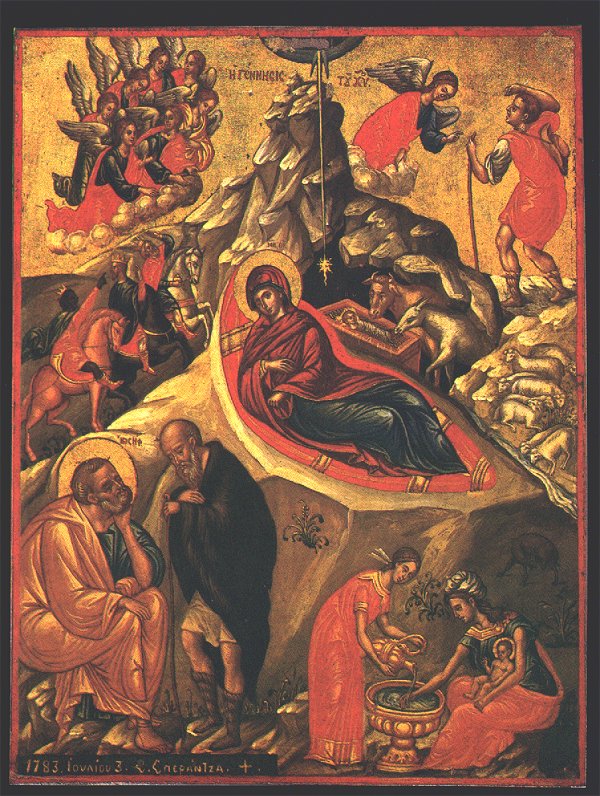
For Christmas Day: Hark! the Herald Angels Sing


Hark! the herald Angels sing,
Glory to the new-born King,
Peace on earth and mercy mild,
God and sinner reconcil'd.
Hark! the herald Angels sing,
Glory to the new-born King.

Joyful all ye nations rise,
Join the triumph of the skies,
With the angelic host proclaim,
Christ is born in Bethlehem.
Hark! the herald Angels sing,
Glory to the new-born King.

Christ by highest Heaven ador'd,
Christ the everlasting Lord!
Late in time behold him come,
Offspring of a virgin's womb.
Hark! the herald Angels sing,
Glory to the new-born King.

Veiled in flesh the Godhead see,
Hail, the incarnate Deity,
Pleased as Man with man to dwell,
Jesus our Immanuel!
Hark! the herald Angels sing,
Glory to the new-born King.

Hail the Heaven-born Prince of Peace!
Hail the Sun of Righteousness!
Light and life to all he brings,
Risen with healing in his wings.
Hark! the herald Angels sing,
Glory to the new-born King.

Mild he lays his glory by,
Born that man no more may die,
Born to raise the sons of earth,
Born to give them second birth.
Hark! the herald Angels sing,
Glory to the new-born King.

Charles Wesley (1707-1788)
George Whitfield (1714-1770)
Martin Madan (1726-1790)

Πέμπτη, Δεκεμβρίου 08, 2005

The Waste Land (απόσπασμα)


The Waste Land
Photo by dawn armfield


"NAM Sibyllam quidem Cumis ego ipse
oculis meis vidi in ampulla pendere, et cum
illi pueri dicerunt:
Sebulla pe theleis;
respondebat illa:
apothanein thelo."


(For Ezra Pound
il miglior fabbro)


I. THE BURIAL OF THE DEAD

APRIL is the cruellest month, breeding
Memory and desire, stirring
Dull roots with spring rain.
Winter kept us warm, covering
Earth in forgetful snow, feeding
A little life with dried tubers.
Summer surprised us, coming over the Starnbergersee
With a shower of rain; we stopped in the colonnade,
And went on in sunlight, into the Hofgarten,
And drank coffee, and talked for an hour.
Bin gar keine Russin, stamm' aus Litauen, echt deutsch.
And when we were children, staying at the archduke's,
My cousin's, he took me out on a sled,
And I was frightened. He said, Marie,
Marie, hold on tight. And down we went.
In the mountains, there you feel free.
I read, much of the night, and go south in the winter.

What are the roots that clutch, what branches grow
Out of this stony rubbish? Son of man,
You cannot say, or guess, for you know only
A heap of broken images, where the sun beats,
And the dead tree gives no shelter, the cricket no relief,
And the dry stone no sound of water. Only
There is shadow under this red rock,
(Come in under the shadow of this red rock),
And I will show you something different from either
Your shadow at morning striding behind you
Or your shadow at evening rising to meet you;
I will show you fear in a handful of dust.

Frisch weht der Wind
Der Heimat zu
Mein Irisch Kind,

Wo weilest du?

"You gave me hyacinths first a year ago;
"They called me the hyacinth girl."
-- Yet when we came back, late, from the Hyacinth garden,
Your arms full, and your hair wet, I could not
Speak, and my eyes failed, I was neither
Living nor dead, and I knew nothing,
Looking into the heart of light, the silence.
Od' und leer das Meer.

Madame Sosostris, famous clairvoyante,
Had a bad cold, nevertheless
Is known to be the wisest woman in Europe,
With a wicked pack of cards. Here, said she,
Is your card, the drowned Phoenician Sailor,
(Those are pearls that were his eyes. Look!)
Here is Belladonna, the Lady of the Rocks,
The lady of situations.
Here is the man with three staves, and here the Wheel,
And here is the one-eyed merchant, and this card,
Which is blank, is something he carries on his back,
Which I am forbidden to see. I do not find
The Hanged Man. Fear death by water.
I see crowds of people, walking round in a ring.
Thank you. If you see dear Mrs. Equitone,
Tell her I bring the horoscope myself:
One must be so careful these days.

Unreal City,
Under the brown fog of a winter dawn,
A crowd flowed over London Bridge, so many,
I had not thought death had undone so many.
Sighs, short and infrequent, were exhaled,
And each man fixed his eyes before his feet.
Flowed up the hill and down King William Street,
To where Saint Mary Woolnoth kept the hours
With a dead sound on the final stroke of nine.
There I saw one I knew, and stopped him, crying: "Stetson!
"You who were with me in the ships at Mylae!
"That corpse you planted last year in your garden,
"Has it begun to sprout? Will it bloom this year?
"Or has the sudden frost disturbed its bed?
"Oh keep the Dog far hence, that's friend to men,
"Or with his nails he'll dig it up again!
"You! hypocrite lecteur!-- mon semblable, -- mon frère!"


Thomas Stearns Eliot (1888-1965)

Αφιερωμένο, όχι για άλλο λόγο αλλά γιατί το όνομα του Blog του μου το θύμισε στον landlord45.

Τετάρτη, Δεκεμβρίου 07, 2005

I thank all who have loved me in their hearts


grey
Originally uploaded by Nevfeniel.
I thank all who have loved me in their hearts,
With thanks and love from mine. Deep thanks to all
Who paused a little near the prison-wall
To hear my music in its louder parts
Ere they went onward, each one to the mart's
Or temple's occupation, beyond call.
But thou, who, in my voice's sink and fall
When the sob took it, thy divinest Art's
Own instrument didst drop down at thy foot
To hearken what I said between my tears, . . .
Instruct me how to thank thee! Oh, to shoot
My soul's full meaning into future years,
That they should lend it utterance, and salute
Love that endures, from Life that disappears!


Elizabeth Barrett Browning

Δευτέρα, Νοεμβρίου 21, 2005

To winter


Νίκος Σταυρακαντωνάκης
"Καταιγίδα" (χαρακτικό)


"Blow, blow, thou winter wind."
Away from here,
And I shall greet thy passing breath
Without a tear.

I do not love thy snow and sleet
Or icy flows;
When I must jump or stamp to warm
My freezing toes.

For why should I be happy or
E'en be merry,
In weather only fitted for
Cook or Peary.

My eyes are red, my lips are blue
My ears frost bitt'n;
Thy numbing kiss doth e'en extend
Thro' my mitten.

I am cold, no matter how I warm
Or clothe me;
O Winter, greater bards have sung
I loathe thee!


Eugene O'Neill (1888-1953)

Πέμπτη, Νοεμβρίου 17, 2005

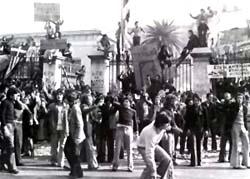
Δοκίμιο ΄73 - ΄74 (απόσπασμα)


V
.........................................................................
Υπάρχει ένα παράθυρο καμωμένο κόσκινο στη φωτογραφία του δρόμου.
Τώρα η σκάλα σε διασχίζει καθέτως απ’ το υπόγειο ως τον αυχένα.
Κάποιος ανεβαίνει μ΄ ένα τρανζίστορ ρυθμικός πολλαπλασιασμός των
ειδήσεων. Στη μικρή οθόνη τα πρόσωπα εναλλάσονται σταθερά δίχως
πολλούς θορύβους. Η εξουσία όπως πάντοτε φωτίζεται με τετραγωνισμένο
φως. Ιαχές. Το πλήθος.

Στο μεταξύ το πλήθος. Αόρατα μάτια με τρείς διαστάσεις ακτινογραφούν
εισερχομένους εξερχομένους διερχομένους. Τα περίστροφα ακίνητα βαθειά
μέσα τους σαφώς οπλισμένα.

Το πλήθος φεύγει έφυγε.

Κι εκεί σε βρήκαν αργότερα με μια ριπή (τρύπες 7-8) στη πλάτη σου ετών
ας πούμε 24 καμμιά ταυτότητα.

XII

Ταξίδι στο μεγάλο διάδρομο καταργημένος χρόνος. Οχι σκοτάδι μήτε
μισοσκόταδο μήτε και φως. Ταξίδι τα χαράματα σ’ ένα γυμνό τοπίο
σκοποβολής. Η βρύση πλένει χέρια κα πουκάμισο οι εφημερίδες καταπίνουν
τις φωνές.

Αστυνομίες αμίλητες μέσα σε σκοτεινές αστυνομίες. Πρωθυπουργοί με
Σκεπασμένο πρόσωπο. Απάνω οι νόμοι σε σειρές σοφή συναρμογή και
διάταξη με τους συνήθεις αγωγούς σωλήνες σωληνώσεις πολαπλά
κυκλώματα με θύρες διαφυγής. Κυκλοφορία παράπλευρη για τους
αξιοπρεπείς φονιάδες

Κι εσείς που ωστόσο συνεχίζετε κρατώντας προστατεύοντας στα δόντια
σας την τελευταία σας λέξη.

Το λάθος των μηχανουργών.


Τάκης Σινόπουλος

Τρίτη, Νοεμβρίου 15, 2005

Tέχνη


Έζησα τα πάθη σα μια φωτιά, τάδα ύστερα να μαραίνονται
και να σβήνουν,και μ' όλο που ξέφευγα απόνα κίνδυνο, έκλαψα
γι' αυτό το τέλος που υπάρχει σε όλα. Δόθηκα στα πιο μεγάλα
ιδανικά, μετά τ' απαρνήθηκα,
και τους ξαναδόθηκα ακόμα πιο ασυγκράτητα. Ένοιωσα
ντροπή μπροστά στους καλοντυμένους,
και θανάσιμη ενοχή για όλους τους ταπεινωμένους και τους
φτωχούς,
είδα τη νεότητα να φεύγει, να σαπίζουν τα δόντια,
θέλησα να σκοτωθώ, από δειλία ή ματαιοδοξία,
συχώρεσα εκείνους που με σύντριψαν, έγλυψα εκεί που
έφτυσα,
έζησα την απάνθρωπη στιγμή, όταν ανακαλύπτεις, πλέον
αργά, ότι είσαι ένας άλλος
από κείνον που ονειρευόσουνα, ντρόπιασα τ' όνομά μου
για να μη μείνει ούτε κηλίδα εγωισμού απάνω μου ―
κι ήταν ο πιο φριχτός εγωισμός. Tις νύχτες έκλαψα,
συνθηκολόγησα τις μέρες, αδιάκοπη πάλη μ' αυτόν τον
δαίμονα μέσα μου
που τα ήθελε όλα, τούδωσα τις πιο γενναίες μου πράξεις,
τα πιο καθάρια μου όνειρα
και πείναγε, τούδωσα αμαρτίες βαρειές, τον πότισα αλκοόλ,
χρέη, εξευτελισμούς,
και πείναγε. Bούλιαξα σε μικροζητήματα
φιλονίκησα για μιας σπιθαμής θέση, κατηγόρησα,
έκανα το χρέος μου από υπολογισμό, και την άλλη στιγμή,
χωρίς κανείς να μου το ζητήσει
έκοψα μικρά-μικρά κομάτια τον εαυτό μου και τον μοίρασα
στα σκυλιά.

Tώρα, κάθομαι μες στη νύχτα και σκέφτομαι, πως ίσως πια
μπορώ να γράψω
ένα στίχο, αληθινό.


Τάσος Λειβαδίτης

Τετάρτη, Νοεμβρίου 09, 2005

Κέρασμα

Κερνάω φρέσκα ποιηματάκια από τον φούρνο της Αρτέμιδας.
Στην υγειά σας.

Δευτέρα, Νοεμβρίου 07, 2005

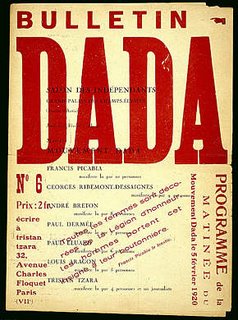
Chanson dada


I

la chanson d'un dadaïste
qui avait dada au coeur
fatiguait trop son moteur
qui avait dada au coeur

l'ascenseur portait un roi
lourd fragile autonome
il coupa son grand bras droit
l'envoya au pape à rome

c'est pourquoi
l'ascenseur
n'avait plus dada au coeur

mangez du chocolat
lavez votre cerveau
dada
dada
buvez de l'eau

II

la chanson d'un dadaïste
qui n'était ni gai ni triste
et aimait une bicycliste
qui n'était ni gaie ni triste
mais l'époux le jour de l'an
savait tout et dans une crise
envoya au vatican
leurs deux corps en trois valises

ni amant
ni cyclist
en'étaient plus ni gais ni tristes

mangez de bons cerveaux
lavez votre soldat
dada
dada
buvez de l'eau

III

la chanson d'un bicycliste
qui était dada de coeur
qui était donc dadaïste
comme tous les dadas de coeur

un serpent portait des gants
il ferma vite la soupape
mit des gants en peau d'serpent
et vient embrasser le pape

c'est touchant
ventre en fleur
n'avait plus dada au coeur

buvez du lait d'oiseaux
lavez vos chocolats
dada
dada
mangez du veau


Tristan Tzara (1923)


Τρίτη, Νοεμβρίου 01, 2005

Μετά


Mάρτυρες για τα λάθη σου δεν είχες. Mόνος μάρτυρας
ο ίδιος εσύ. Tα τακτοποίησες, τα μονόγραψες, τα σφράγισες
σε λευκούς πάντοτε φακέλους σα να ετοίμαζες
τη δίκαιη διαθήκη σου. Ύστερα
τα τοποθέτησες προσεχτικά στα ράφια. Tώρα, γαλήνιος,
(ίσως και κάπως φοβισμένος) ούτε βιάζεσαι
ούτε καθυστερείς, γνωρίζοντας ότι, μετά το θάνατό σου,
θ' ανακαλύψουμε πόσον ωραίος ήσουν,
πόσο πολύ πιο ωραίος πέρα απ' τις αρετές σου.


Aθήνα, 16.1.1988

Γιάννης Ρίτσος

Τετάρτη, Οκτωβρίου 26, 2005

Έχει και η Ψυχή τον δικό της Κονιορτό


Έχει και η ψυχή τον δικό της κονιορτό που εάν σηκωθεί μέσα μας αέρας, αλίμονο. Oι ορμές χτυπάνε στα παράθυρα, τα τζάμια θρυμματίζονται. Λίγοι ξέρουν ότι ο υπερθετικός στα αισθήματα σχηματίζεται με το φως, όχι με τη δύναμη. Kι ότι χρειάζεται χάδι εκεί που βάζουν μαχαίρι. Ότι ένας κοιτώνας με τη μυστική συνεννόηση των σωμάτων μάς παρακολουθεί παντού και μας παραπέμπει στην αγιότητα χωρίς συγκατάβαση.

A ! όταν η στιγμή φτάσει να καθίσουμε κι εμείς πάνω στο πεζούλι κάποιας Aγίας Πρέκλας εν μέσω αγριοσυκών, μορεών με ερυθρούς καρπούς, εις έρημον τόπον, απόκρημνον ακτήν, τότε η μικρή Kουμπώ μ' ένα κερί στο χέρι θα σηκωθεί στις μύτες των ποδιών να φτάσει εκεί ψηλά, μέσα στον αναστεναγμό μας, όλα τα εύφλεκτα: πάθη, πείσματα, φωνές οργής, μυριάδες έντομα χρωματιστούλια που να λαμπαδιάσει ο τόπος !

Οδυσσέας Ελύτης

Παρασκευή, Οκτωβρίου 21, 2005

I'm nobody! Who are you?

I'm nobody! Who are you?
Are you nobody, too?
Then there's a pair of us -- don't tell!
They'd banish us, you know.

How dreary to be somebody!
How public, like a frog
To tell your name the livelong day
To an admiring bog!


Emily Dickinson

Δευτέρα, Οκτωβρίου 10, 2005

Autumn


Autumn, Craig McPherson
λάδι σε μουσαμά, 1980 .


A touch of cold in the Autumn night --
I walked abroad,
And saw the ruddy moon lean over a hedge
Like a red-faced farmer.
I did not stop to speak, but nodded,
And round about were the wistful stars
With white faces like town children.

Thomas Ernest Hulme (1883-1917)

CHANSON D'AUTOMNE


Les sanglots longs
Des violons
De l'automne
Blessent mon coeur
D'une langueur
Monotone

Tout suffoquant
Et blême, quand
Sonne l'heure
Je me souviens
Des jours anciens
Et je pleure ;

Et je m'en vais
Au vent mauvais
Qui m'emporte
Deça, delà
Pareil à la
Feuille morte.


Paul Verlaine
Poèmes saturniens

Τρίτη, Σεπτεμβρίου 20, 2005

Dear Doctor, I have Read your Play

Dear Doctor, I have read your play,
Which is a good one in its way,
Purges the eyes, and moves the bowels,
And drenches handkerchiefs like towels
With tears that, in a flux of grief,
Afford hysterical relief
To shatter'd nerves and quicken'd pulses,
Which your catastrophe convulses.
I like your moral and machinery;
Your plot, too, has such scope for scenery!
Your dialogue is apt and smart;
The play's concoction full of art;
Your hero raves, your heroine cries,
All stab, and everybody dies;
In short, your tragedy would be
The very thing to hear and see;
And for a piece of publication,
If I decline on this occasion,
It is not that I am not sensible
To merits in themselves ostensible,
But--and I grieve to speak it--plays
Are drugs--mere drugs, Sir, nowadays.
I had a heavy loss by Manuel --
Too lucky if it prove not annual--
And Sotheby, with his damn'd Orestes
(Which, by the way, the old bore's best is),
Has lain so very long on hand
That I despair of all demand;
I've advertis'd--but see my books,
Or only watch my shopman's looks;
Still Ivan, Ina and such lumber
My back-shop glut, my shelves encumber.
There's Byron too, who once did better,
Has sent me--folded in a letter--
A sort of--it's no more a drama
Than Darnley, Ivan or Kehama:
So alter'd since last year his pen is,
I think he's lost his wits at Venice,
Or drain'd his brains away as stallion
To some dark-eyed and warm Italian;
In short, Sir, what with one and t'other,
I dare not venture on another.
I write in haste; excuse each blunder;
The coaches through the street so thunder!
My room's so full; we've Gifford here
Reading MSS with Hookham Frere,
Pronouncing on the nouns and particles
Of some of our forthcoming articles,
The Quarterly--ah, Sir, if you
Had but the genius to review!
A smart critique upon St. Helena,
Or if you only would but tell in a
Short compass what--but, to resume;
As I was saying, Sir, the room--
The room's so full of wits and bards,
Crabbes, Campbells, Crokers, Freres and Wards,
And others, neither bards nor wits--
My humble tenement admits
All persons in the dress of Gent.,
From Mr. Hammond to Dog Dent.
A party dines with me today,
All clever men who make their way:
Crabbe, Malcolm, Hamilton and Chantrey
Are all partakers of my pantry.
They're at this moment in discussion
On poor De Staël's late dissolution.
Her book, they say, was in advance--
Pray Heaven she tell the truth of France!
'Tis said she certainly was married
To Rocca, and had twice miscarried,
No--not miscarried, I opine--
But brought to bed at forty nine.
Some say she died a Papist; some
Are of opinion that's a hum;
I don't know that--the fellow, Schlegel,
Was very likely to inveigle
A dying person in compunction
To try the extremity of unction.
But peace be with her! for a woman
Her talents surely were uncommon.
Her publisher (and public too)
The hour of her demise may rue,
For never more within his shop he--
Pray--was she not interr'd at Coppet?
Thus run our time and tongues away;
But, to return, Sir, to your play;
Sorry, Sir, but I cannot deal,
Unless 'twere acted by O'Neill.
My hands are full--my head so busy,
I'm almost dead--and always dizzy;
And so, with endless truth and hurry,
Dear Doctor, I am yours,

JOHN MURRAY


George Gordon Lord Byron (1788-1824)


Όταν ο εκδότης του Byron, John Murray, του ζήτησε να τον βοηθήσει για μια ευγενή άρνηση σε μια τραγωδία που του υπέβαλλε ο γιατρός J. W. Polidori, παλιός γνώριμος του Byron, εκείνος αντέδρασε γράφοντας τους παραπάνω στίχους σε μια επιστολή με ημερομηνία 27 Αυγούστου 1817, η οποία πρωτοείδε το φως της δημοσιότητας από τον Moore στην έκδοση Letters and Journals of Lord Byron (1830).
Το 1816, ο Polidori (1795-1821) συνόδευσε τον Byron στην Ελβετία και αργότερα τον ξανασυνάντησε στην Ιταλία. Η ματαιοδοξία του ήταν πηγή διασκέδασης αλλά και αρκετής ενόχλησης για τον ποιητή. Αργότερα, το 1819, ο Polidori διαφήμισε του μυθιστόρημά του The Vampyre, σαν έργο του Byron.