Τετάρτη, Οκτωβρίου 26, 2005

Έχει και η Ψυχή τον δικό της Κονιορτό


Έχει και η ψυχή τον δικό της κονιορτό που εάν σηκωθεί μέσα μας αέρας, αλίμονο. Oι ορμές χτυπάνε στα παράθυρα, τα τζάμια θρυμματίζονται. Λίγοι ξέρουν ότι ο υπερθετικός στα αισθήματα σχηματίζεται με το φως, όχι με τη δύναμη. Kι ότι χρειάζεται χάδι εκεί που βάζουν μαχαίρι. Ότι ένας κοιτώνας με τη μυστική συνεννόηση των σωμάτων μάς παρακολουθεί παντού και μας παραπέμπει στην αγιότητα χωρίς συγκατάβαση.

A ! όταν η στιγμή φτάσει να καθίσουμε κι εμείς πάνω στο πεζούλι κάποιας Aγίας Πρέκλας εν μέσω αγριοσυκών, μορεών με ερυθρούς καρπούς, εις έρημον τόπον, απόκρημνον ακτήν, τότε η μικρή Kουμπώ μ' ένα κερί στο χέρι θα σηκωθεί στις μύτες των ποδιών να φτάσει εκεί ψηλά, μέσα στον αναστεναγμό μας, όλα τα εύφλεκτα: πάθη, πείσματα, φωνές οργής, μυριάδες έντομα χρωματιστούλια που να λαμπαδιάσει ο τόπος !

Οδυσσέας Ελύτης

Παρασκευή, Οκτωβρίου 21, 2005

I'm nobody! Who are you?

I'm nobody! Who are you?
Are you nobody, too?
Then there's a pair of us -- don't tell!
They'd banish us, you know.

How dreary to be somebody!
How public, like a frog
To tell your name the livelong day
To an admiring bog!


Emily Dickinson

Δευτέρα, Οκτωβρίου 10, 2005

Autumn


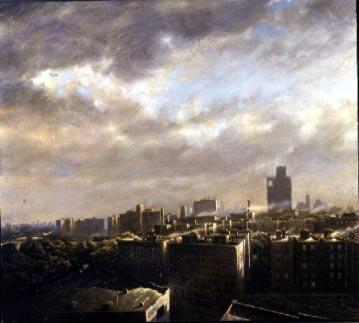
Autumn, Craig McPherson
λάδι σε μουσαμά, 1980 .


A touch of cold in the Autumn night --
I walked abroad,
And saw the ruddy moon lean over a hedge
Like a red-faced farmer.
I did not stop to speak, but nodded,
And round about were the wistful stars
With white faces like town children.

Thomas Ernest Hulme (1883-1917)

CHANSON D'AUTOMNE


Les sanglots longs
Des violons
De l'automne
Blessent mon coeur
D'une langueur
Monotone

Tout suffoquant
Et blême, quand
Sonne l'heure
Je me souviens
Des jours anciens
Et je pleure ;

Et je m'en vais
Au vent mauvais
Qui m'emporte
Deça, delà
Pareil à la
Feuille morte.


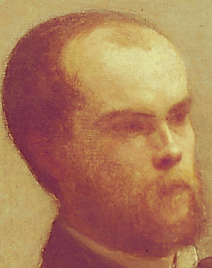
Paul Verlaine
Poèmes saturniens

Τρίτη, Σεπτεμβρίου 20, 2005

Dear Doctor, I have Read your Play

Dear Doctor, I have read your play,
Which is a good one in its way,
Purges the eyes, and moves the bowels,
And drenches handkerchiefs like towels
With tears that, in a flux of grief,
Afford hysterical relief
To shatter'd nerves and quicken'd pulses,
Which your catastrophe convulses.
I like your moral and machinery;
Your plot, too, has such scope for scenery!
Your dialogue is apt and smart;
The play's concoction full of art;
Your hero raves, your heroine cries,
All stab, and everybody dies;
In short, your tragedy would be
The very thing to hear and see;
And for a piece of publication,
If I decline on this occasion,
It is not that I am not sensible
To merits in themselves ostensible,
But--and I grieve to speak it--plays
Are drugs--mere drugs, Sir, nowadays.
I had a heavy loss by Manuel --
Too lucky if it prove not annual--
And Sotheby, with his damn'd Orestes
(Which, by the way, the old bore's best is),
Has lain so very long on hand
That I despair of all demand;
I've advertis'd--but see my books,
Or only watch my shopman's looks;
Still Ivan, Ina and such lumber
My back-shop glut, my shelves encumber.
There's Byron too, who once did better,
Has sent me--folded in a letter--
A sort of--it's no more a drama
Than Darnley, Ivan or Kehama:
So alter'd since last year his pen is,
I think he's lost his wits at Venice,
Or drain'd his brains away as stallion
To some dark-eyed and warm Italian;
In short, Sir, what with one and t'other,
I dare not venture on another.
I write in haste; excuse each blunder;
The coaches through the street so thunder!
My room's so full; we've Gifford here
Reading MSS with Hookham Frere,
Pronouncing on the nouns and particles
Of some of our forthcoming articles,
The Quarterly--ah, Sir, if you
Had but the genius to review!
A smart critique upon St. Helena,
Or if you only would but tell in a
Short compass what--but, to resume;
As I was saying, Sir, the room--
The room's so full of wits and bards,
Crabbes, Campbells, Crokers, Freres and Wards,
And others, neither bards nor wits--
My humble tenement admits
All persons in the dress of Gent.,
From Mr. Hammond to Dog Dent.
A party dines with me today,
All clever men who make their way:
Crabbe, Malcolm, Hamilton and Chantrey
Are all partakers of my pantry.
They're at this moment in discussion
On poor De Staël's late dissolution.
Her book, they say, was in advance--
Pray Heaven she tell the truth of France!
'Tis said she certainly was married
To Rocca, and had twice miscarried,
No--not miscarried, I opine--
But brought to bed at forty nine.
Some say she died a Papist; some
Are of opinion that's a hum;
I don't know that--the fellow, Schlegel,
Was very likely to inveigle
A dying person in compunction
To try the extremity of unction.
But peace be with her! for a woman
Her talents surely were uncommon.
Her publisher (and public too)
The hour of her demise may rue,
For never more within his shop he--
Pray--was she not interr'd at Coppet?
Thus run our time and tongues away;
But, to return, Sir, to your play;
Sorry, Sir, but I cannot deal,
Unless 'twere acted by O'Neill.
My hands are full--my head so busy,
I'm almost dead--and always dizzy;
And so, with endless truth and hurry,
Dear Doctor, I am yours,

JOHN MURRAY


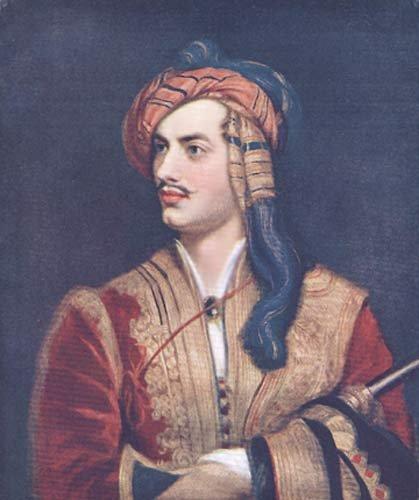
George Gordon Lord Byron (1788-1824)


Όταν ο εκδότης του Byron, John Murray, του ζήτησε να τον βοηθήσει για μια ευγενή άρνηση σε μια τραγωδία που του υπέβαλλε ο γιατρός J. W. Polidori, παλιός γνώριμος του Byron, εκείνος αντέδρασε γράφοντας τους παραπάνω στίχους σε μια επιστολή με ημερομηνία 27 Αυγούστου 1817, η οποία πρωτοείδε το φως της δημοσιότητας από τον Moore στην έκδοση Letters and Journals of Lord Byron (1830).
Το 1816, ο Polidori (1795-1821) συνόδευσε τον Byron στην Ελβετία και αργότερα τον ξανασυνάντησε στην Ιταλία. Η ματαιοδοξία του ήταν πηγή διασκέδασης αλλά και αρκετής ενόχλησης για τον ποιητή. Αργότερα, το 1819, ο Polidori διαφήμισε του μυθιστόρημά του The Vampyre, σαν έργο του Byron.
Δευτέρα, Σεπτεμβρίου 05, 2005

To the Returned Girls

Will you read my little pome,
O you girls returnéd home
From a summertime of sport
At the Jolliest Resort,
From a Heated Term of joys
Far from urban dust and noise?

You I speak to in this rhyme,
You have had a Glorious Time
Swimming, golfing, bridging, dancing,
Riding, tennising, romancing,
On the springboard, on the raft --
You've been often photographed.

At the place you have forsaken,
You have had some pictures taken,
Pictures taken of you dancing,
Riding, tennising, romancing,
Swimming, golfing, and reclining;
Snacking, luncheoning, and dining.

Cometh now my brief advice;
Ladies, be ye ne'er so nice,
Be ye ne'er so fascinating,
Luring, drawing, captivating,
If with interest you'd imbue us,
Do not show those pictures to us!

Snapshots of the links and lawn
Cause in many of us a yawn;
(As for me myself, why, I'm
Glad to see 'em any time)
But -- I give it to you square --
Lots of people do not care.


Franklin Pierce Adams (1881-1960)

... κι άλλο ένα αστείο, για την επιστροφή!
Καλώς σας βρίσκω.

Παρασκευή, Ιουλίου 22, 2005

Sex


Amœbas at the start
Were not complex;
They tore themselves apart
And started Sex.

And Sex has ruled the earth
From then till this,
Producing woe and mirth
And pain and bliss.

Through Sex the seedling wakes
To cleave the ground;
'Tis really Sex that makes
The world go 'round.

It sublimates the mind
With noble themes,
Or sends it unrefined,
Suggestive dreams.

'Tis Sex that rules the lives
Of clods and kings;
It gives us books and wives
And other things --

Ambition, love, and strife
And all the ills
And ecstasies of life --
And Freuds and Brills.


Arthur Guiterman


Ένα αστείο μέσα στη γενικότερη χαλάρωση της άδειάς μου που ξεκινάει σήμερα.
Καλή ξεκούραση σε όλους.

Δευτέρα, Ιουλίου 18, 2005

ΕΝΟΣ ΛΕΠΤΟΥ ΜΑΖΙ


Jardin secret
Originally uploaded by Callixte..
Γειτονόπουλο τ’ ουρανού το σπίτι.
Τόσο ψηλά χτισμένη της προσέγγισης η τάση
επάνω σε κορφής τις ανοιχτές φτερούγες σαν
αναλόγιο ν’ αναγιγνώσκει η εκθάμβωση το ανατέλλον
το μεσουρανούν το δύον ευαγγέλιο της.

Βγαίνω στην αυλή. Με περιμένει απαστράπτουσα
με γκέμια σέλα χάμουρα η άγρια ελευθερία του ορίζοντα
ν’ ανέβω και καλπάζοντας την επαλήθευσή της να δαμάσω.
Α, μόνο το βλέμμα και το όραμα κατάφεραν να ιππεύουν
την άυλη ετούτη ατίθαση κατάκτηση.
Οι υπερφίαλες απόψεις των αιθέρων πέφτουνε τσακίζονται
διότι ελάχιστα διαρκεί το ανεμπόδιστο.

Ιδού πως σκοντάφτει σε μια σπιθαμή συρματόπλεγμα
γύρω από το χτήμα. Χαμηλό, ήμερο κι όμως
αν το καλοκοιτάξεις το καλοαισθανθείς διαιρεί
τη δική μου καλημέρα από του γείτονα
ολημερίς σύνορα φανατίζει σιωπηρά οπλίζοντας
ξερόχορτα εναντίον αδελφών τους.

Το βράδυ μόνο, η ενωτική ευωδιά του νυχτολούλουδου
το ψαλιδίζει τόπους τόπους και περνά
υπό το παράφρον φέγγος των πυγολαμπίδων
- κωλοφωτιές τις λέγαμε όταν ζούσαμε.

Αχ, ηρωισμοί εθελοντών ονείρων άδοξοι. Τι ωφελεί
να καταπατήσεις δύο πόντους φεγγαρόσκονη ακόμα
κληρονομιά που άφησε το θέρος στη φυγή του.

Άσε να τηρήσουν ενός λεπτού μαζί
κάτι αγράμματες χήρες παρατάσεις
που δεν τις πιάνει ο νόμος

αν και κανείς δεν ξέρει
τι τους επιφυλάσσει ακόμα η ελπίδα.


Καλοκαίρι, Πλάτανος – Αιγιαλεία


Κική Δημουλά
Ενός λεπτού μαζί

Παρασκευή, Ιουλίου 15, 2005

L’ ENNEMI

Ma jeunesse ne fut qu’un ténébreux orage,
Traversé ça et là par des brillants soleils ;
Le tonnerre et la pluie ont fait un tel ravage
Qu’il reste en mon jardin bien peu de fruits vermeils.

Voilà que j’ai touché l’automne des idées,
Et qu’il faut employer la pelle et les râteaux
Pour rassembler à neuf les terres inondées,
Où l’eau creuse des trous grands comme des tombeaux.

Et qui sait si les fleurs nouvelles que je rêve
Trouveront dans ce sol lavé comme une grève
Le mystique aliment qui ferait leur vigueur ?

- Ô douleur ! ô douleur ! Le Temps mange la vie,
Et l’obscur Ennemi qui nous ronge le cœur
Du sang que nous perdons croît et se fortifie !


Ch. Baudelaire
Les fleurs du mal
Spleen et idéal

Τετάρτη, Ιουλίου 13, 2005

La Bella Donna della mia Mente


Centre of a Pale Rose
Originally uploaded by Colour.
My limbs are wasted with a flame,
My feet are sore with travelling,
For calling on my Lady’s name
My lips have now forgot to sing.

O Linnet in the wild-rose brake
Strain for my Love thy melody,
O Lark sing louder for love’s sake,
My gentle Lady passeth by.

She is too fair for any man
To see or hold his heart’s delight,
Fairer than Queen or courtezan
Or moon-lit water in the night.

Her hair is bound with myrtle leaves,
(Green leaves upon her golden hair!)
Green grasses through the yellow sheaves
Of autumn corn are not more fair.

Her little lips, more made to kiss
Than to cry bitterly for pain,
Are tremulous as brook-water is,
Or roses after evening rain.

Her neck is like white melilote
Flushing for pleasure of the sun,
The throbbing of the linnet’s throat
Is not so sweet to look upon.

As a pomegranate, cut in twain,
White-seeded, is her crimson mouth,
Her cheeks are as the fading stain
Where the peach reddens to the south.

O twining hands! O delicate
White body made for love and pain!
O House of love! O desolate
Pale flower beaten by the rain!

Oscar Wilde

Παρασκευή, Ιουλίου 08, 2005

Figs


figs
Originally uploaded by emotional anaemia.
The proper way to eat a fig, in society,
Is to split it in four, holding it by the stump,
And open it, so that it is a glittering, rosy, moist, honied, heavy-petalled four-petalled flower.

Then you throw away the skin
Which is just like a four-sepalled calyx,
After you have taken off the blossom with your lips.

But the vulgar way
Is just to put your mouth to the crack, and take out the flesh in one bite.

Every fruit has its secret.

The fig is a very secretive fruit.
As you see it standing growing, you feel at once it is symbolic:
And it seems male.
But when you come to know it better, you agree with the Romans, it is female.

The Italians vulgarly say, it stands for the female part; the fig-fruit:
The fissure, the yoni,
The wonderful moist conductivity towards the centre.

Involved,
Inturned,
The flowering all inward and womb-fibrilled;
And but one orifice.

The fig, the horse-shoe, the squash-blossom.
Symbols.

There was a flower that flowered inward, womb-ward;
Now there is a fruit like a ripe womb.

It was always a secret.
That's how it should be, the female should always be secret.

There never was any standing aloft and unfolded on a bough
Like other flowers, in a revelation of petals;
Silver-pink peach, venetian green glass of medlars and sorb-apples,
Shallow wine-cups on short, bulging stems
Openly pledging heaven:
Here's to the thorn in flower! Here is to Utterance!
The brave, adventurous rosaceæ.

Folded upon itself, and secret unutterable,
And milky-sapped, sap that curdles milk and makes ricotta,
Sap that smells strange on your fingers, that even goats won't taste it;
Folded upon itself, enclosed like any Mohammedan woman,
Its nakedness all within-walls, its flowering forever unseen,
One small way of access only, and this close-curtained from the light;
Fig, fruit of the female mystery, covert and inward,
Mediterranean fruit, with your covert nakedness,
Where everything happens invisible, flowering and fertilisation, and fruiting
In the inwardness of your you, that eye will never see
Till it's finished, and you're over-ripe, and you burst to give up your ghost.

Till the drop of ripeness exudes,
And the year is over.

And then the fig has kept her secret long enough.
So it explodes, and you see through the fissure the scarlet.
And the fig is finished, the year is over.

That's how the fig dies, showing her crimson through the purple slit
Like a wound, the exposure of her secret, on the open day.
Like a prostitute, the bursten fig, making a show of her secret.

That's how women die too.

The year is fallen over-ripe,
The year of our women.
The year of our women is fallen over-ripe.
The secret is laid bare.
And rottenness soon sets in.
The year of our women is fallen over-ripe.

When Eve once knew in her mind that she was naked
She quickly sewed fig-leaves, and sewed the same for the man.
She'd been naked all her days before,
But till then, till that apple of knowledge, she hadn't had the fact on her mind.

She got the fact on her mind, and quickly sewed fig-leaves.
And women have been sewing ever since.
But now they stitch to adorn the bursten fig, not to cover it.
They have their nakedness more than ever on their mind,
And they won't let us forget it.

Now, the secret
Becomes an affirmation through moist, scarlet lips
That laugh at the Lord's indignation.

What then, good Lord! cry the women.
We have kept our secret long enough.
We are a ripe fig.
Let us burst into affirmation.

They forget, ripe figs won't keep.
Ripe figs won't keep.

Honey-white figs of the north, black figs with scarlet inside, of the south.
Ripe figs won't keep, won't keep in any clime.
What then, when women the world over have all bursten into affirmation?
And bursten figs won't keep?

San Gervasio.


David Herbert Lawrence

Δευτέρα, Ιουλίου 04, 2005

Hymn to Intellectual Beauty

The awful shadow of some unseen Power
Floats though unseen among us; visiting
This various world with as inconstant wing
As summer winds that creep from flower to flower;
Like moonbeams that behind some piny mountain shower,
It visits with inconstant glance
Each human heart and countenance;
Like hues and harmonies of evening,
Like clouds in starlight widely spread,
Like memory of music fled,
Like aught that for its grace may be
Dear, and yet dearer for its mystery.

Spirit of BEAUTY, that dost consecrate
With thine own hues all thou dost shine upon
Of human thought or form, where art thou gone?
Why dost thou pass away and leave our state,
This dim vast vale of tears, vacant and desolate?
Ask why the sunlight not for ever
Weaves rainbows o'er yon mountain-river,
Why aught should fail and fade that once is shown,
Why fear and dream and death and birth
Cast on the daylight of this earth
Such gloom, why man has such a scope
For love and hate, despondency and hope?

No voice from some sublimer world hath ever
To sage or poet these responses given:
Therefore the names of Demon, Ghost, and Heaven,
Remain the records of their vain endeavour:
Frail spells whose utter'd charm might not avail to sever,
From all we hear and all we see,
Doubt, chance and mutability.
Thy light alone like mist o'er mountains driven,
Or music by the night-wind sent
Through strings of some still instrument,
Or moonlight on a midnight stream,
Gives grace and truth to life's unquiet dream.

Love, Hope, and Self-esteem, like clouds depart
And come, for some uncertain moments lent.
Man were immortal and omnipotent,
Didst thou, unknown and awful as thou art,
Keep with thy glorious train firm state within his heart.
Thou messenger of sympathies,
That wax and wane in lovers' eyes;
Thou, that to human thought art nourishment,
Like darkness to a dying flame!
Depart not as thy shadow came,
Depart not--lest the grave should be,
Like life and fear, a dark reality.

While yet a boy I sought for ghosts, and sped
Through many a listening chamber, cave and ruin,
And starlight wood, with fearful steps pursuing
Hopes of high talk with the departed dead.
I call'd on poisonous names with which our youth is fed;
I was not heard; I saw them not;
When musing deeply on the lot
Of life, at that sweet time when winds are wooing
All vital things that wake to bring
News of birds and blossoming,
Sudden, thy shadow fell on me;
I shriek'd, and clasp'd my hands in ecstasy!

I vow'd that I would dedicate my powers
To thee and thine: have I not kept the vow?
With beating heart and streaming eyes, even now
I call the phantoms of a thousand hours
Each from his voiceless grave: they have in vision'd bowers
Of studious zeal or love's delight
Outwatch'd with me the envious night:
They know that never joy illum'd my brow
Unlink'd with hope that thou wouldst free
This world from its dark slavery,
That thou, O awful LOVELINESS,
Wouldst give whate'er these words cannot express.

The day becomes more solemn and serene
When noon is past; there is a harmony
In autumn, and a lustre in its sky,
Which through the summer is not heard or seen,
As if it could not be, as if it had not been!
Thus let thy power, which like the truth
Of nature on my passive youth
Descended, to my onward life supply
Its calm, to one who worships thee,
And every form containing thee,
Whom, SPIRIT fair, thy spells did bind
To fear himself, and love all human kind.


Percy Bysshe Shelley


Στο σημείωμά της στα ποιήματα το 1816, η Mary Shelley (σύζυγος του ποιητή) γράφει : " Πέρασε το καλοκαίρι στις ακτές της Λίμνης της Γενεύης. Ο "ύμνος στην πνευματική ομορφιά", συνελήφθη κατά τη διάρκεια του ταξιδιού του γύρω από την λίμνη με τον Λόρδο Byron."

Ο όρος "intellectual" πρέπει να γίνει αντιληπτός ως "εγνωσμένη από το μυαλό, χωρίς την βοήθεια της φυσικής αίσθησης" (όπως γίνεται αντιληπτό και από τους δύο πρώτους στίχους).

Πέμπτη, Ιουνίου 30, 2005

Μικρους θανάτους, η ποίηση δεν έχει...

Είναι πολύ εύκολο να μιλήσεις για τον θάνατο.
Ειδικά για τον θάνατο ενός επιφανούς προσώπου.
Οικειοποιείσαι την φήμη του, το μεγαλείο του και πουλάς μούρη εξ αντανακλάσεως με επικηδείους άνευ σημασίας.
Είναι πολύ εύκολο να μιλήσεις και για το θάνατο «προσφιλούς προσώπου». Προβάλεις πάνω στο γεγονός του θανάτου του τα δικά σου συναισθήματα. Και ουσιαστικά δεν μιλάς για τον θανόντα παρά για τη δική σου απώλεια. Έτσι είναι ο θάνατος υποκειμενικός.

Στην ηλικία μου ο θάνατος αρχίζει το ψιλόβροχο.
Γύρω-γύρω άνθρωποι με τους οποίους σχετίζομαι, λίγο ή περισσότερο, τελειώνουν.
Αυτός ο θάνατος για τον οποίο δεν μπορείς να μιλήσεις, είναι ο θάνατος των ανθρώπων με τους οποίους σχετίζεσαι λίγο. Που όσο κι αν τους εκτιμάς, δεν είναι «επιφανείς» κι όσο κι αν τους συμπαθείς, δεν είναι «προσφιλείς».

Τέτοιος θάνατος ενέσκηψε εχθές. Ο πατέρας της νύφης μου πέθανε. Ο παππούς του βαφτιστηριού μου. Ούτε μεγάλος πολύ, μα ούτε και νεαρός, 70 χρονών, ο άνθρωπος αυτός, είχε ένα μέτριο θάνατο όπως και μια μέτρια ζωή. Ο θάνατος αυτός, μ’ έκανε να σκεφτώ, πως ο θάνατος δεν περιγράφεται. Όχι γιατί με δυσκολεύει το συναισθηματικό παραπέτασμα να τον αντιληφθώ. Παρά γιατί η ουσία του παραμένει άγνωστη. Κι όσο κι αν προσπαθήσω να τον περιγράψω, μόνο παρομοιάζοντάς τον με άλλες έννοιες μπορώ να τον σημαδέψω λίγο.

Αυτό είναι και το κοινό του χαρακτηριστικό με την αγάπη. Ούτε αυτή περιγράφεται.

Αναζήτησα ένα ποίημα για τον ξερό μέτριο θάνατο ενός απλού αξιοπρεπούς «μη προσφιλούς» ανθρώπου. Δεν βρήκα. Οι ποιητές γράφουν για πρόσωπα που τους προκαλούν πάθος.

Κι έτσι, ελπίζοντας η Αστραδενή να μην θυμώσει, σας στέλνω στο δικό της το ποίημα, που αν και δεν μιλάει για τέτοιο θάνατο, του αξίζει πολύ να το δείτε και να το εκτιμήσετε. Είναι μόνο του αφορμή για στοχασμό.

Παρασκευή, Ιουνίου 24, 2005

Ποιητική

― Προδίδετε πάλι την Ποίηση, θα μου πεις,
Την ιερότερη εκδήλωση του Ανθρώπου
Την χρησιμοποιείτε πάλι ως μέσον, υποζύγιον
Των σκοτεινών επιδιώξεών σας
Εν πλήρει γνώσει της ζημίας που προκαλείτε
Με το παράδειγμά σας στους νεωτέρους.

― Το τί δ ε ν πρόδωσες ε σ ύ να μου πεις
Εσύ κι οι όμοιοί σου, χρόνια και χρόνια,
Ένα προς ένα τα υπάρχοντά σας ξεπουλώντας
Στις διεθνείς αγορές και τα λαϊκά παζάρια
Και μείνατε χωρίς μάτια για να βλέπετε, χωρίς αυτιά
N' ακούτε, με σφραγισμένα στόματα και δε μιλάτε.
Για ποια ανθρώπινα ιερά μάς εγκαλείτε;

Ξέρω: κηρύγματα και ρητορείες πάλι, θα πεις.
Έ ναι λοιπόν! Κηρύγματα και ρητορείες.

Σαν π ρ ό κ ε ς πρέπει να καρφώνονται οι λέξεις

Nα μην τις παίρνει ο άνεμος.


Αναγνωστάκης Μανόλης


Κρατάμε την όμορφη πόλη και τ’ άλλα δώρα.
Καλή Αντάμωση.

Παρασκευή, Ιουνίου 17, 2005

Good Girl

Hold up the universe, good girl. Hold up
the tent that is the sky of your world at which
you are the narrow center pole, good girl. Rup-
ture is the enemy. Keep all whole. The itch
to be yourself, plump and bending, below a sky
unending, held up by God forever
is denied by you as Central Control. Sever
yourself, poor false Atlas, poor "Atlesse," lie
recumbent below the sky. Nothing falls down,
except you, luscious and limited on the ground.
Holding everything up, always on your own,
creates a loneliness so profound
you are nothing but a column, good girl,
a temple ruin against a sky held up
by forces beyond you. Let yourself curl
up: a fleshy foetal figure cupped
about its own vibrant soul. You are
the universe about its pole. God's not far.


Molly Peacock

Τετάρτη, Ιουνίου 08, 2005

Ο ΠΛΗΘΥΝΤΙΚΟΣ ΑΡΙΘΜΟΣ

Ο έρωτας,

όνομα ουσιαστικόν,

πολύ ουσιαστικόν,

ενικού αριθμού

γένους ούτε θηλυκού ούτε αρσενικού,

γένους ανυπεράσπιστου.

Πληθυντικός αριθμός

οι ανυπεράσπιστοι έρωτες.

.

Ο φόβος,

όνομα ουσιαστικόν,

στην αρχή ενικός αριθμός

και μετά πληθυντικός :

οι φόβοι.

Οι φόβοι

για όλα από δω και πέρα.

.

Η μνήμη,

κύριο όνομα των θλίψεων,

ενικού αριθμού,

μόνον ενικού αριθμού

και άκλιτη.

Η μνήμη, η μνήμη, η μνήμη.

.

Η νύχτα,

όνομα ουσιαστικόν,

γένους θηλυκού,

ενικός αριθμός

Πληθυντικός αριθμός

οι νύχτες.

Οι νύχτες από δω και πέρα.

.

.

.

Κική Δημουλά
Το λίγο του κόσμου

Παρασκευή, Μαΐου 27, 2005

A Dream within a Dream

Take this kiss upon the brow!
And, in parting from you now,
Thus much let me avow--
You are not wrong, who deem
That my days have been a dream;
Yet if hope has flown away
In a night, or in a day,
In a vision, or in none,
Is it therefore the less gone?
All that we see or seem
Is but a dream within a dream.

I stand amid the roar
Of a surf-tormented shore,
And I hold within my hand
Grains of the golden sand--
How few! yet how they creep
Through my fingers to the deep,
While I weep--while I weep!
O God! can I not grasp
Them with a tighter clasp?
O God! can I not save
One from the pitiless wave?
Is all that we see or seem
But a dream within a dream?

Edgar Allan Poe

Δευτέρα, Μαΐου 23, 2005

Doublecrossroads

Ενοχή.
Προδοσία?
Δική μου?
Τίνος?
Εμπιστοσύνη…
Αγάπηπουσκοτώνει.
Αγάπηπουσκοτώθηκε.
Αγάπηπουπέθανεαποφυσικόθάνατο.
Υπήρξε αγάπη.
Υπήρξε έρωτας?
Ενοχή.

Είναι αυτή η στιγμή που δεν ξέρεις πώς να διώξεις την ενοχή. Ξέρεις ότι δεν σου αξίζει. Ξέρεις ότι «η ενοχή είναι ο αντίποδας της ευθύνης». Προσπαθείς να την διώξεις. Ν’ αναλάβεις τις ευθύνες σου. Να σταθείς με το κεφάλι ψηλά. Να ξαναγαπήσεις τον εαυτό σου τον προδομένο. Πως γίνεται αυτό? Μα πάντα έτσι γίνεται. Πάντα τον εαυτό σου προδίδεις. Σ’ αυτόν ψεύδεσαι. Και μετατρέπεις τη ζωή σε επανάληψη μιας άθλιας καθημερινότητας.
Η ενοχή φωλιάζει μέχρι και στα νύχια σου. Και δεν είναι ενοχή για πράξεις Είναι ενοχή για συναισθήματα. Γιατί σταμάτησες να αγαπάς. Όχι δεν σταμάτησες να αγαπάς. Σταμάτησες να θέλεις. Επειδή αγαπάς αλλά δεν θέλεις γι αυτό νοιώθεις ένοχος.
Τα μάτια σου καίνε.
Τα μαλλιά σου τα νοιώθεις να ξεκολλάνε από το κεφάλι σου.
Τα νύχια σου πονάνε.
Υποφέρεις.
Κι αυτός υποφέρει.
Διώξε την ενοχή.
Πάρε την ευθύνη.
Ζήσε τον σπαραγμό.

Τετάρτη, Απριλίου 27, 2005

The Ballad of Reading Gaol

...

Yet each man kills the thing he loves,
By each let this be heard,
Some do it with a bitter look,
Some with a flattering word,
The coward does it with a kiss,
The brave man with a sword!

Some kill their love when they are young,
And some when they are old;
Some strangle with the hands of Lust,
Some with the hands of Gold:
The kindest use a knife, because
The dead so soon grow cold.

Some love too little, some too long,
Some sell, and others buy;
Some do the deed with many tears,
And some without a sigh:
For each man kills the thing he loves,
Yet each man does not die.


...

Oscar Wilde

Τετάρτη, Απριλίου 20, 2005

The heart asks pleasure first

The heart asks pleasure first,
And then, excuse from pain;
And then, those little anodynes
That deaden suffering;

And then, to go to sleep;
And then, if it should be
The will of its Inquisitor,
The liberty to die.

Emily Dickinson